Table Lamp
Table Lamps
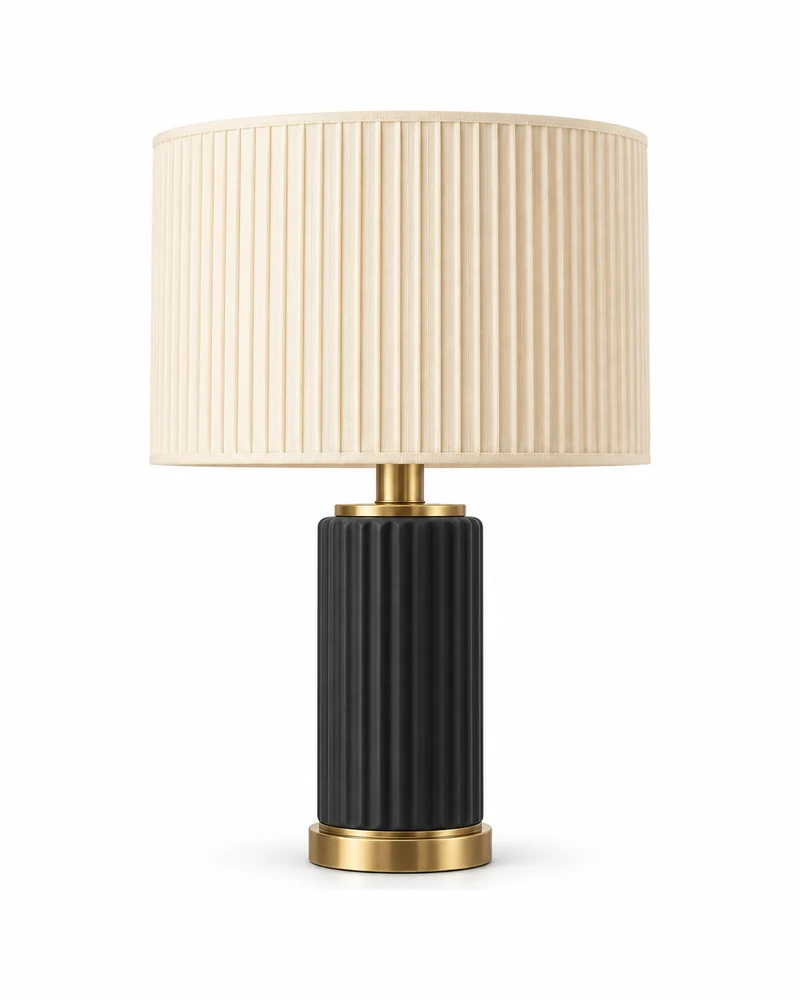
A table lamp with a fluted metal column and a woven fabric shade, in matte black or sand. The vertical ribs catch a line of highlight down the body, which keeps a plain lamp from reading as a block.

A workspace needs one bright, close source and one dim, distant source.
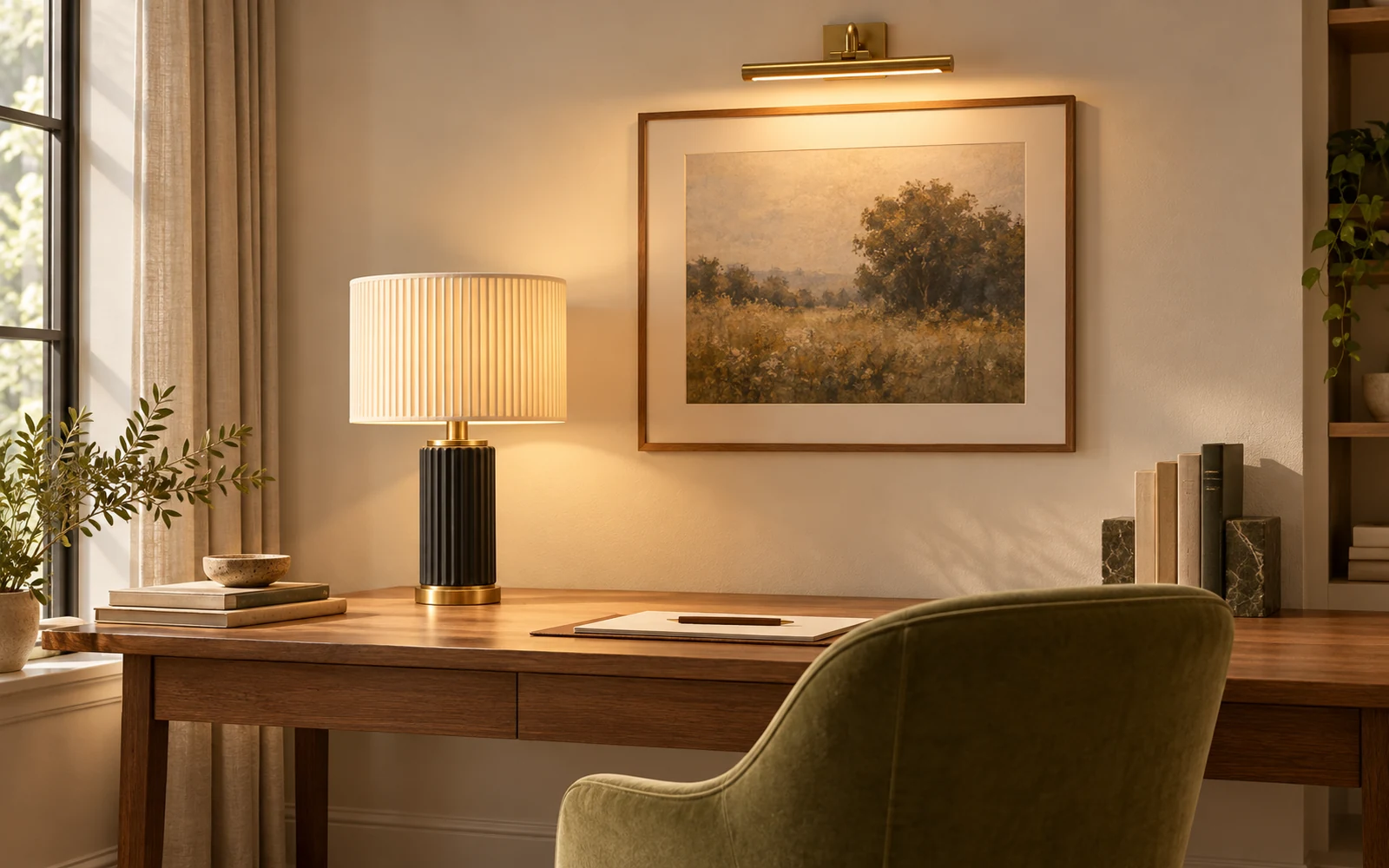
Working at a desk for hours is easier when the light near the hands is brighter than the light behind the screen. The eyes then adjust to one dominant level instead of switching between them.
Place a table lamp to the side of the working hand so it casts no shadow across paper or keyboard. Height matters more than output; a shade that sits near eye level will glare.
Add a softer source further back, such as a picture light mounted high on the wall behind the desk. This lowers the contrast between the desk and the wall, which reduces the feeling of working in a pool of light.
Both sources should be warm enough to stay comfortable late in the day, and both should be dimmable so the room can drop gradually as the evening goes on.
The fixtures used in this story.
Table Lamps
A table lamp with a fluted metal column and a woven fabric shade, in matte black or sand. The vertical ribs catch a line of highlight down the body, which keeps a plain lamp from reading as a block.
Picture Lights
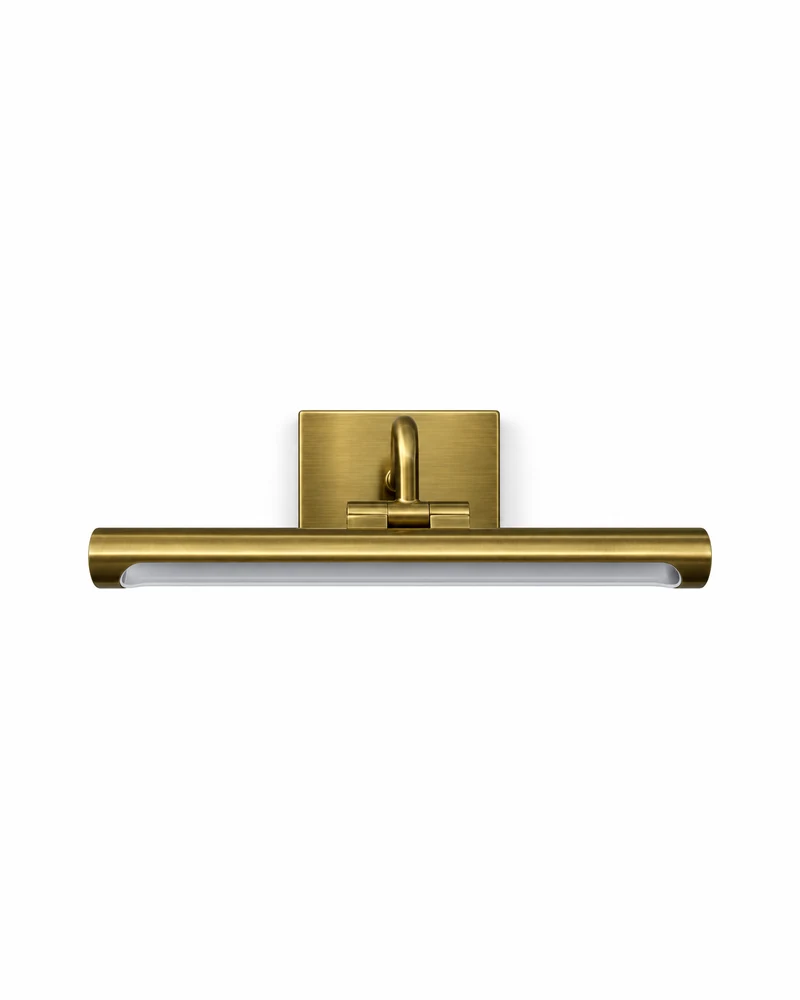
A longer picture light on a rectangular backplate. The tube runs past the bracket on both sides and carries a diffuser along its length, so the light spreads evenly across a wide frame instead of pooling in the centre.
Other rooms and setups to browse.
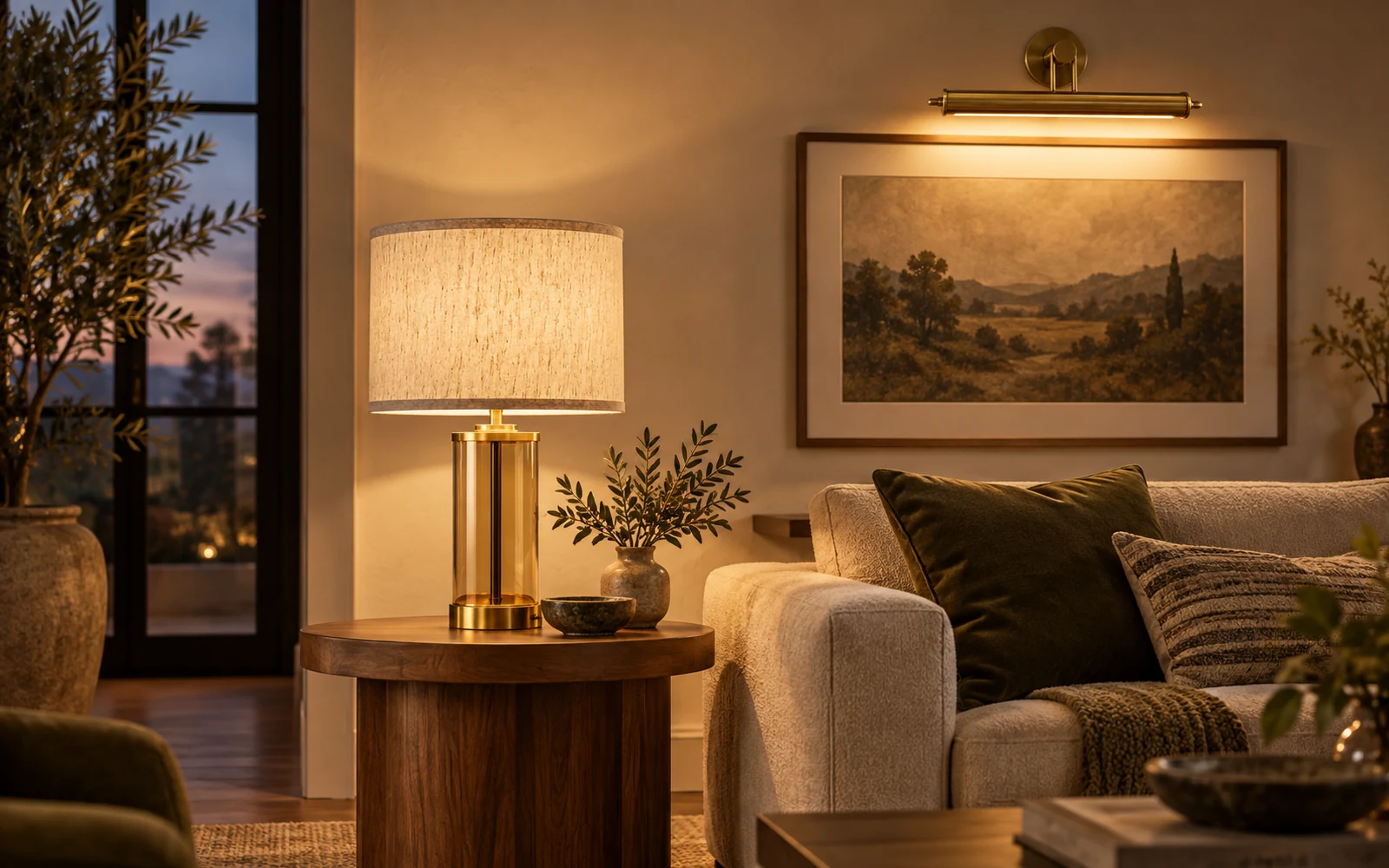
Layer two low light sources so the room stays usable after the ceiling light goes off.
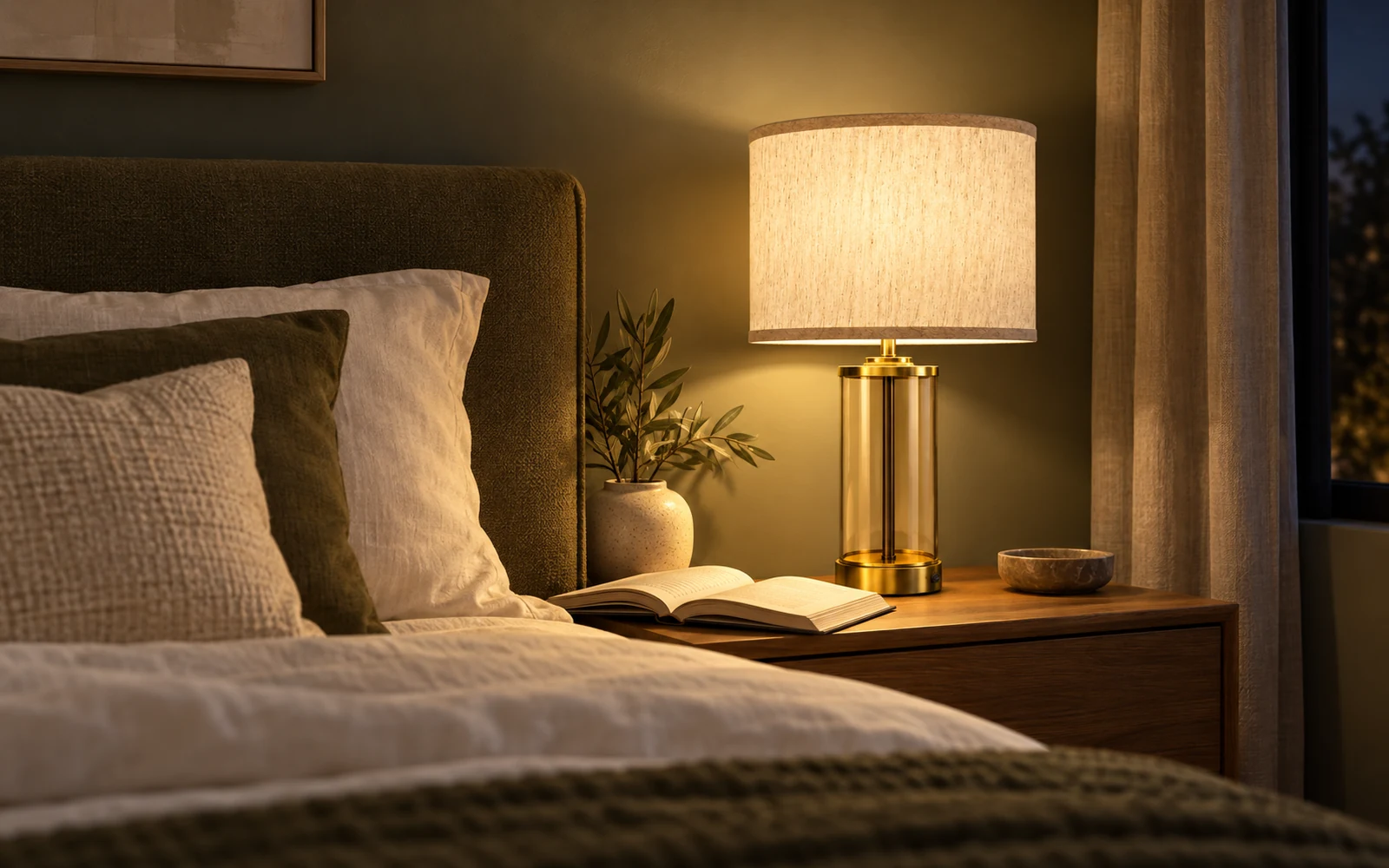
Direct light onto the page, not into the room, so a partner can sleep.
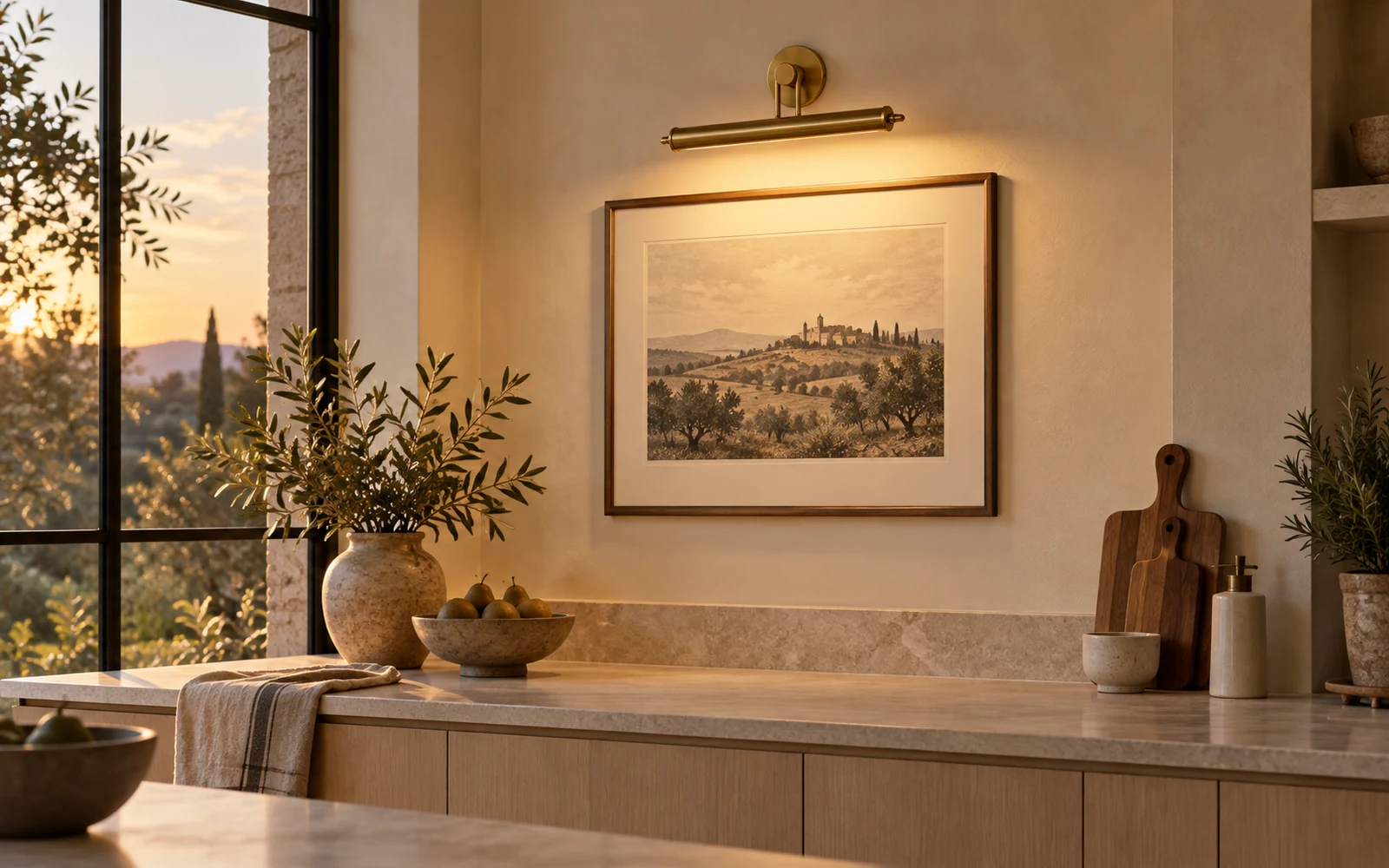
Light the counter directly instead of lighting the whole room.